The Prisoner - 1967
R.I.P. Patrick McGoohan 19 March 1928 - 13 January 2009. Perhaps the most original, challenging and enigmatic television series ever produced, "The Prisoner" follows the struggle for freedom faced by a man known only as "Number 6". It begins when a secret agent angrily resigns from his job and then returns home to pack for a much-needed holiday. He is followed by two sinister undertakers, who pump gas through the keyhole of the door to his house, rendering him unconscious. When the agent awakes, he finds himself in an exact replica of his room, in the middle of a remote, architecturally bizarre Village. The villagers are identified by numbers, and the agent is told by Number 2, the Village leader, that he is Number 6 - but who is Number 1? Episodes usually involve Number 6's attempts to escape his prison, to keep his identity and sanity in the face of the eccentricities of Village life, and to resist the devious plans of each new Number 2, whose task it is to wear him down in order to discover why he resigned from his job. "The Prisoner" was the creation of Patrick McGoohan, who not only played Number 6, but who also took the role of Executive Producer, as well as writing and directing several episodes. Location filming took place in the village of Portmeirion in Wales, a bizarre and eclectic mix of architecture that gave a unique style to the show. The stories are strange, disturbing and exciting; the writing is ingenious and compelling. Explanations are rarely given, and the programme challenges the viewer to think for themselves and to reach their own conclusions. Be seeing you! Introduction written by Clivebanks.co.uk
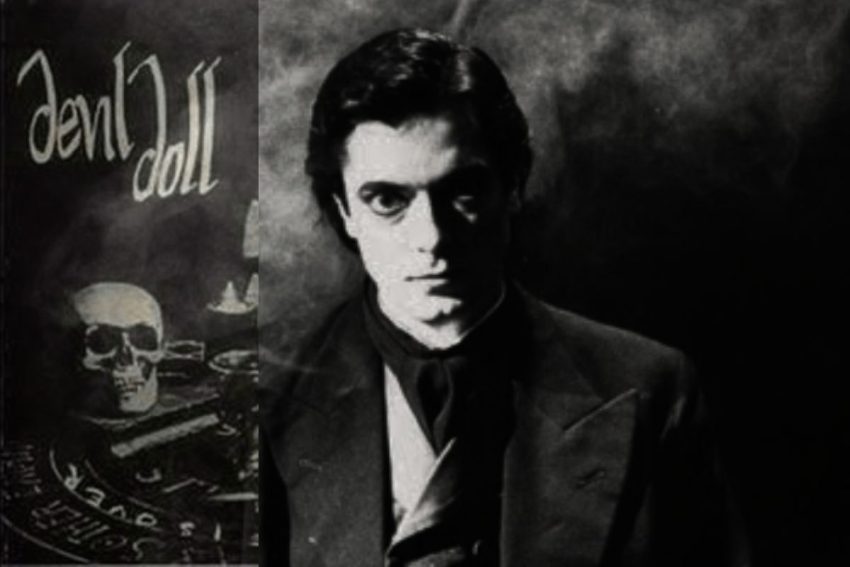
Lyrical Inspiration The Devil Doll album The Girl Who Was... Death was based on The Prisoner even taking it's name from Episode 15, The Girl Who Was Death. Below you will find screenshots and links to small flash video files that correlate with the lyrics of the album. The words have greater meaning when put into context with the themes of The Prisoner. The theme song was covered by Devil Doll and the recording was used as the original intro for first pressing of The Girl Who Was... Death. It was later used as the outro on the cd re-releases. This is our own interpretation of the lyrics but you must make up your own mind.
WHEN HE TURNS HIS BACK HE LOOKS AT YOU. DON'T TRUST HIM WHEN HIS EYES ARE CLOSED: HE STILL LOOKS AT YOU.
References:
I FLED, I FLED
References: The shapeless bulk in this scene which is referred to as "Rover" often chases Number Six in a very aggressive manner. Rover always appears when Number Six is behaving unruly as though it can read his thoughts. Many people have debated the symbolic meaning of Rover and have come up with the following theories.
IN A PLACE WHERE
References:
OF THE COSMOS References:
Once people have been integrated into The Village they no longer have the urge to escape. They have conformed to the situation and have retired the thought of attempting to leave. Number Six will not conform to the situation, attempting to escape regularly but failing every time.
"WHO ARE YOU LOOKING FOR? References:
I CAN'T REMEMBER References:
"WITHOUT CORPSES References:
I WILL NOT BE PUSHED,
References:
-NIGHTMARE-
WELCOME, MY FRIEND!
References:
YOU MUST LEARN, WE ARE ALL PAWNS References: We believe that the scene from Episode 9 should not be taken literally but as a symbolism of society. It seems that this scene is a metaphor depicting the complete control the commanders of The Village have over it's population. As the chess players they move the pieces around the board like a game. As the pawns, the normal citizens must learn to conform to the rules of The Village, lose all individuality or identity and realise they are dispensible. The "pawns" can try to control their own lives but it is hopeless, the chess player is always anticipating their next move and is always in control. This series was very visionary because the whole idea that "big brother" is watching you and that the population is being controlled and monitored by the state is now more real than ever. Fiction has become reality.
"MAYBE YOU DON'T KNOW MY FACE, References: Scene from Episode 15, The Girl Who Was Death (1.5MB) Throughout this episode, the girl referred to as Death tells Number Six that she loves him while trying to kill him. We believe that these lyrics once again refer to the impossibility of escape in the way that the only freedom he can gain would be death which would serve no purpose.
"WHY ARE THEY TRYING
References:
FACE TO FACE, References:
THE MASK! THE MASK!
BUT JUST AS VICTORY References: Number Six is removes two masks from a man wearing Number One on his clothing and reveals himself behind the mask. Number One sneers and laughs as he runs away from Number Six. We believe this scene and the fact that Number Six is really Number One symbolises that we control our own fate and that once we realise we are in control we are free.
WHEN VICTIM AND HANGMAN
WANDERING THROUGH THE CATACOMBS OF LIFE
|